When we moved into our current home, we knew we wanted to approach furnishing it differently.
In our previous home, we bought furniture piece by piece as we needed it. There was nothing necessarily wrong with that, but over time, the rooms didn’t feel as cohesive as we wanted them to. Each purchase made sense on its own, but the house never quite came together the way we’d pictured.
This time, we decided to be more intentional.
As we prepared to move, we sold our previous furniture and planned for new furnishings as part of our moving expenses. We wanted a warm, comfortable, organic-modern feel, with pieces that worked together instead of making each room feel like a separate project.
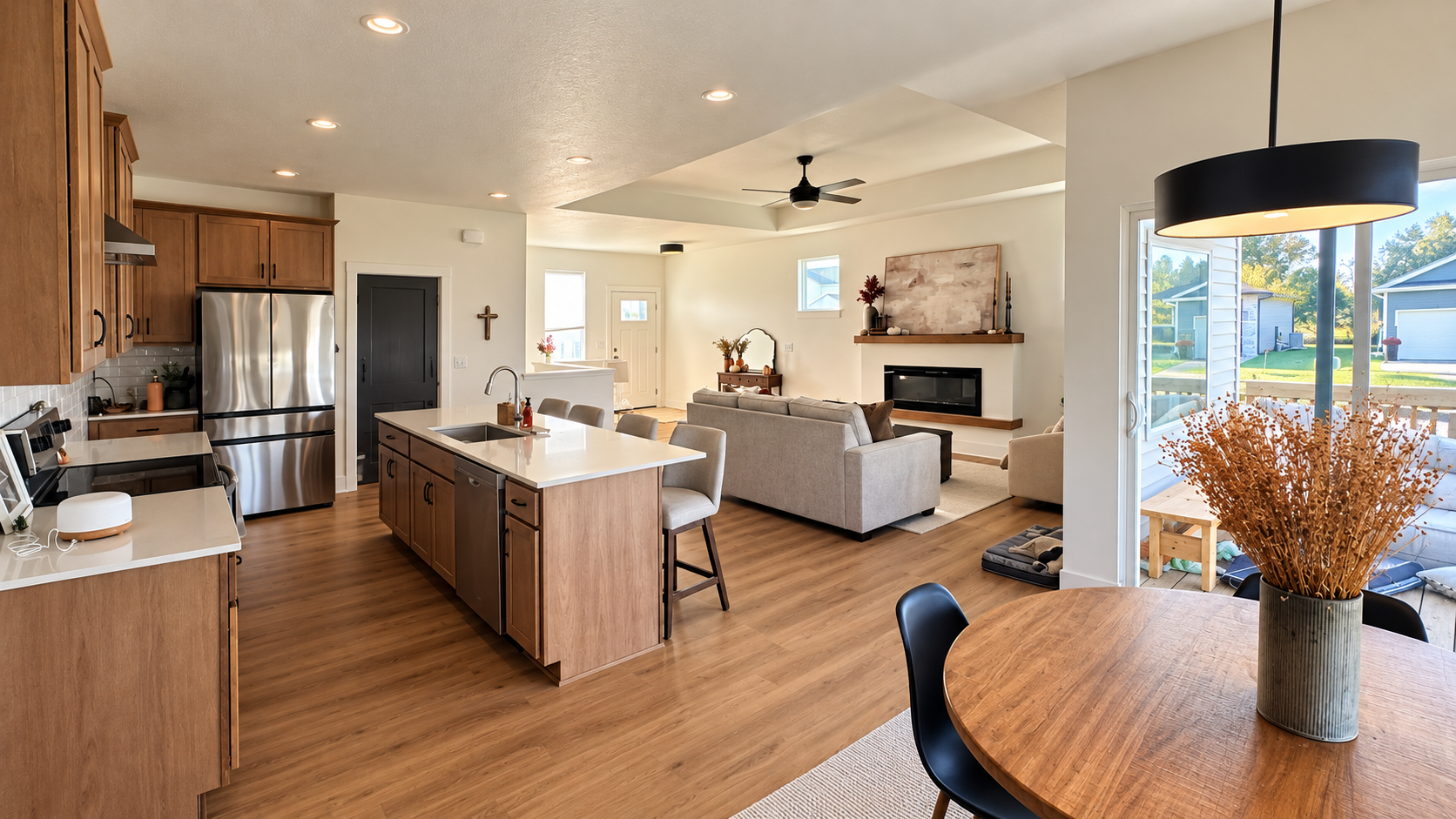
Our living room, dining area, and kitchen island all connect in one open floor plan, so the decisions we made in one area affected the others.
We also wanted a home that felt like us. A place where people could gather, where our meaningful family pieces had a place, and where we could relax without worrying about everything looking perfect.
So, what did we actually spend?
The purchases included in this breakdown totaled approximately $5,086. That’s real money, and I’m not going to pretend otherwise. But the more interesting part is how we decided where to spend, where we found deals, and what we learned along the way.
Why We Approached It Differently This Time
Our biggest lesson from the last house was that buying furniture one piece at a time doesn’t always create the overall look you’re hoping for.
This time, we thought about the connected spaces as a whole. We considered colors, textures, comfort, and how we wanted the rooms to feel when we were spending time together.
That didn’t mean buying everything from one store or choosing the most expensive option. It meant having a general vision and trying to make thoughtful decisions within our budget.
Some things were worth spending more on. Other purchases were opportunities to save. And some things we already owned were worth keeping.
That balance became the foundation for furnishing the space.
The Living Room: Comfort Was Worth Prioritizing
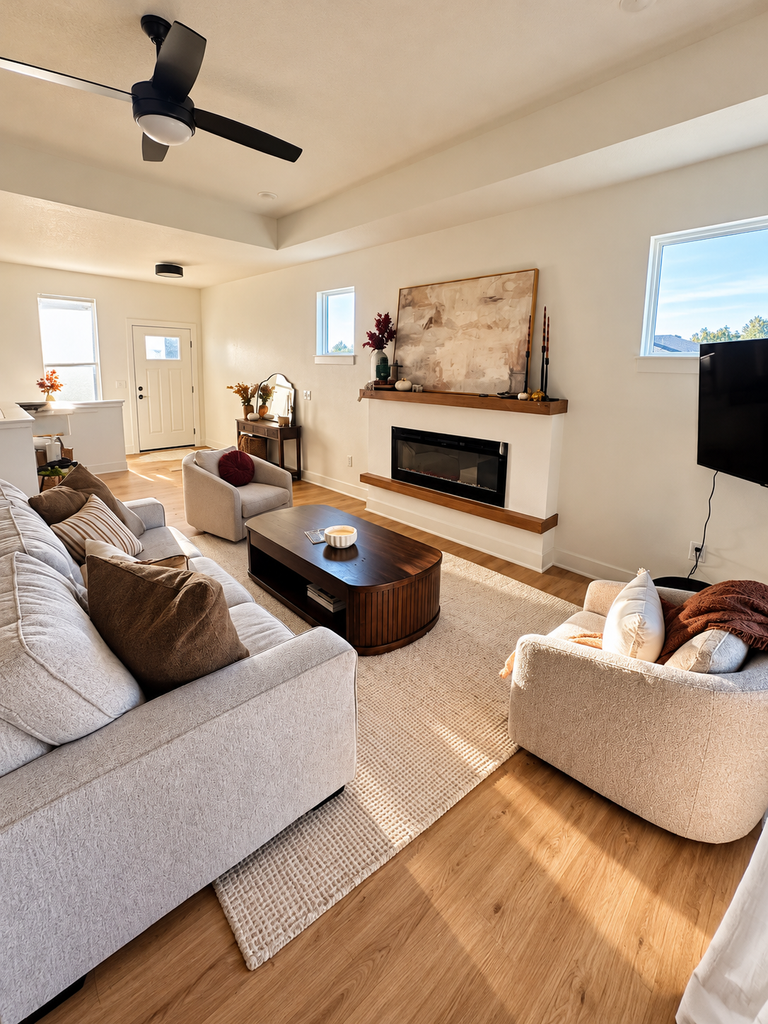
The living room was one of the biggest parts of the investment because we wanted it to feel comfortable and welcoming, not just look good in a photograph.
The West Elm Swivel Chairs
Our two West Elm Imogene swivel chairs in bouclé were one of the bigger purchases: $2,115 for both chairs.
We decided to splurge a little here because comfort mattered to us. We wanted chairs that felt good to sit in and that we’d genuinely enjoy using—not just chairs that looked nice in the room.
But that decision didn’t happen in a vacuum. We found such a good deal on our sleeper sofa that it gave us more flexibility to spend on the chairs. If we’d paid more for the couch, we might have made a different decision.
That’s something I’ve learned about furnishing a home: sometimes one good deal gives you room to spend a little more somewhere else. It’s not about making every purchase the cheapest option. It’s about deciding what matters most to you and making the overall budget work.
The Sleeper Sofa
We found an Ashley Larimer queen sleeper sofa in stone for about $350.
Finding a sofa at that price made a real difference in how we could allocate our budget. It also gave us a practical option for accommodating overnight guests without dedicating an entire room to a guest bed.
This was a good reminder that a lower price doesn’t automatically mean you have to settle for something that doesn’t work for your home.
The Coffee Table
We spent approximately $500 on an Ashley Korestone lift-top coffee table with casters.
We wanted something that fit the room while also serving a purpose. The lift-top design adds functionality, and the casters make it easier to move around when we need to adjust the space.
When you’re furnishing a home, practical features matter just as much as appearance. A piece can look good, but if it doesn’t work for the way you live, you’re probably not going to love it for long.
The Living Room Rug
We also spent about $500 on a large rug from Homemakers.
The living room is connected to the rest of the open floor plan, so the rug helps define that area without putting up a wall or visually separating it from the dining room and kitchen.
In an open space, each area needs to feel distinct enough to serve its purpose while still working with everything around it. The rug helped us accomplish that.
The Kitchen Island: Finding the Right Bar Stools
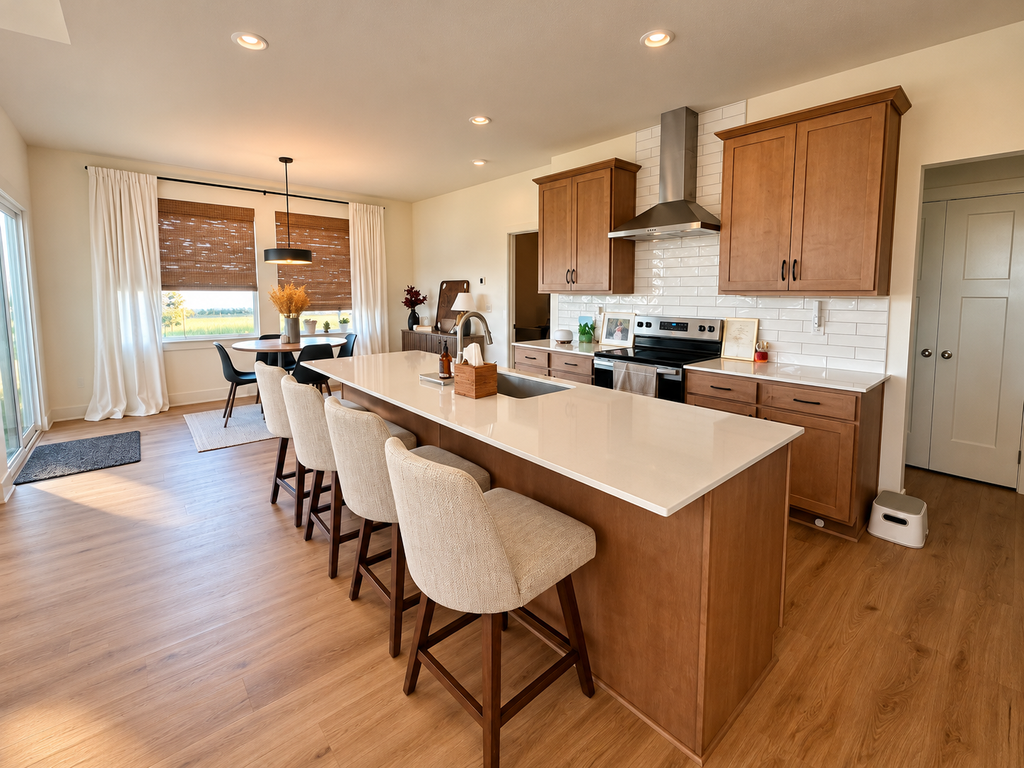
The bar stools were surprisingly one of the hardest things to find.
Because our kitchen island opens into the living and dining area, they couldn’t feel like an afterthought. We wanted something that worked with the rest of the furniture and helped the whole space feel connected.
We ended up with four Armen Living Amelia beige bar stools at $225.99 each, for a total of $903.96.
That was a meaningful part of the budget, but finding pieces that worked together was important to us.
I think this is one of the challenges of an open floor plan that people don’t always consider. You aren’t furnishing three completely separate rooms. You’re choosing pieces that will all be visible together, so the wrong color, shape, or style can stand out more than you expect.
Sometimes finding the right piece takes longer than you think it should. We learned that it was worth being patient instead of buying something just to get the room finished.
The Dining Area: Keeping What We Already Loved
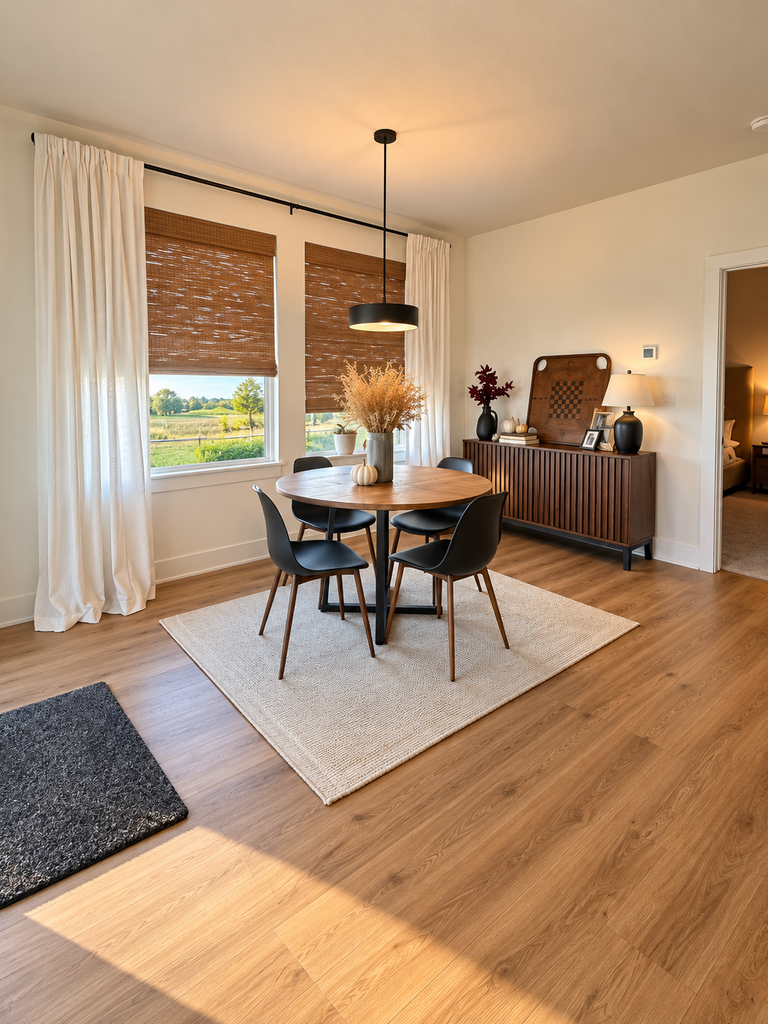
One of the ways we avoided spending even more was by keeping our existing round dining table and chairs.
They still worked for our family, and there was no reason to replace them simply because we were buying other new furniture.
We did purchase a smaller rug from HomeGoods for about $120 to help define the dining area.
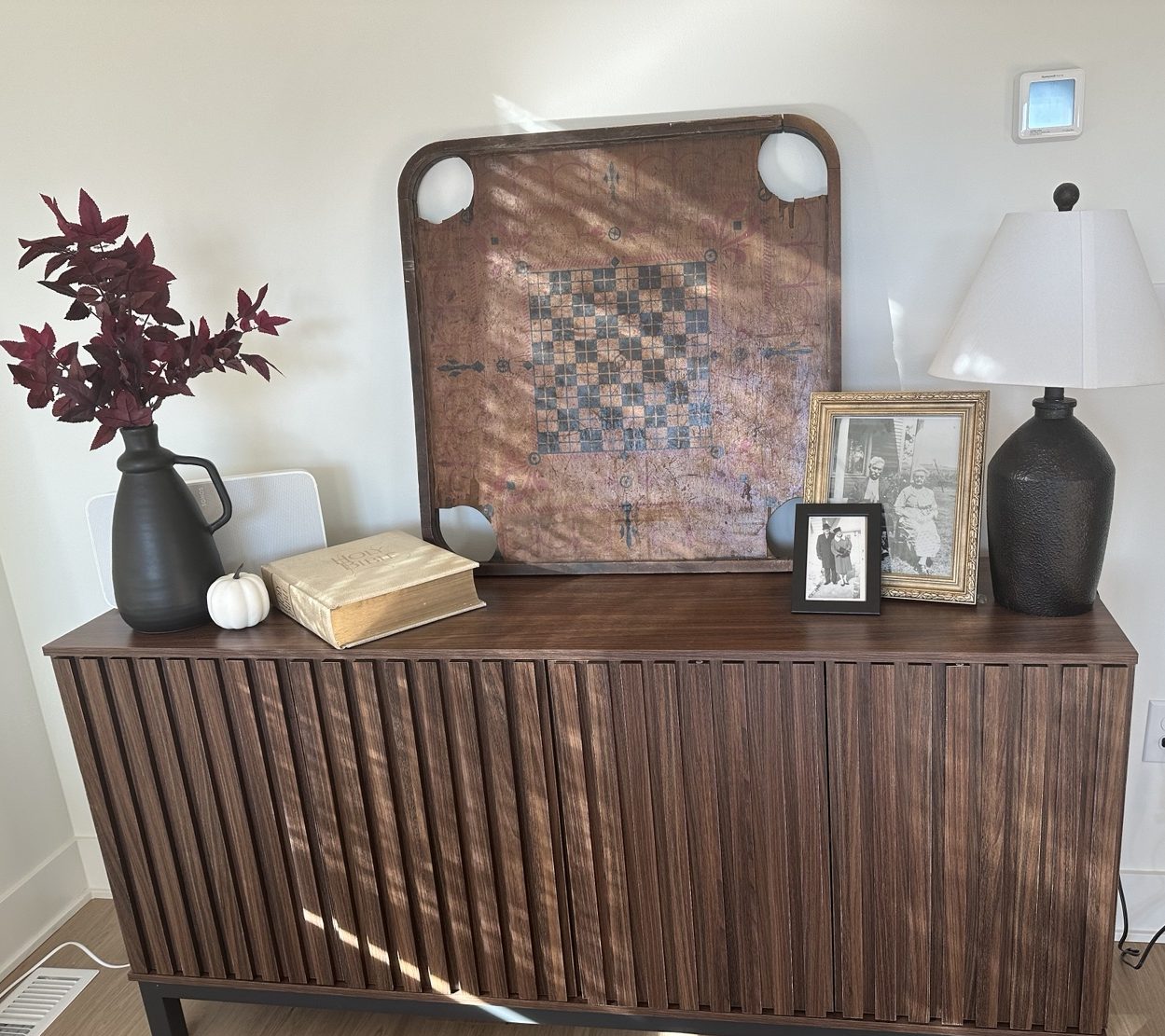
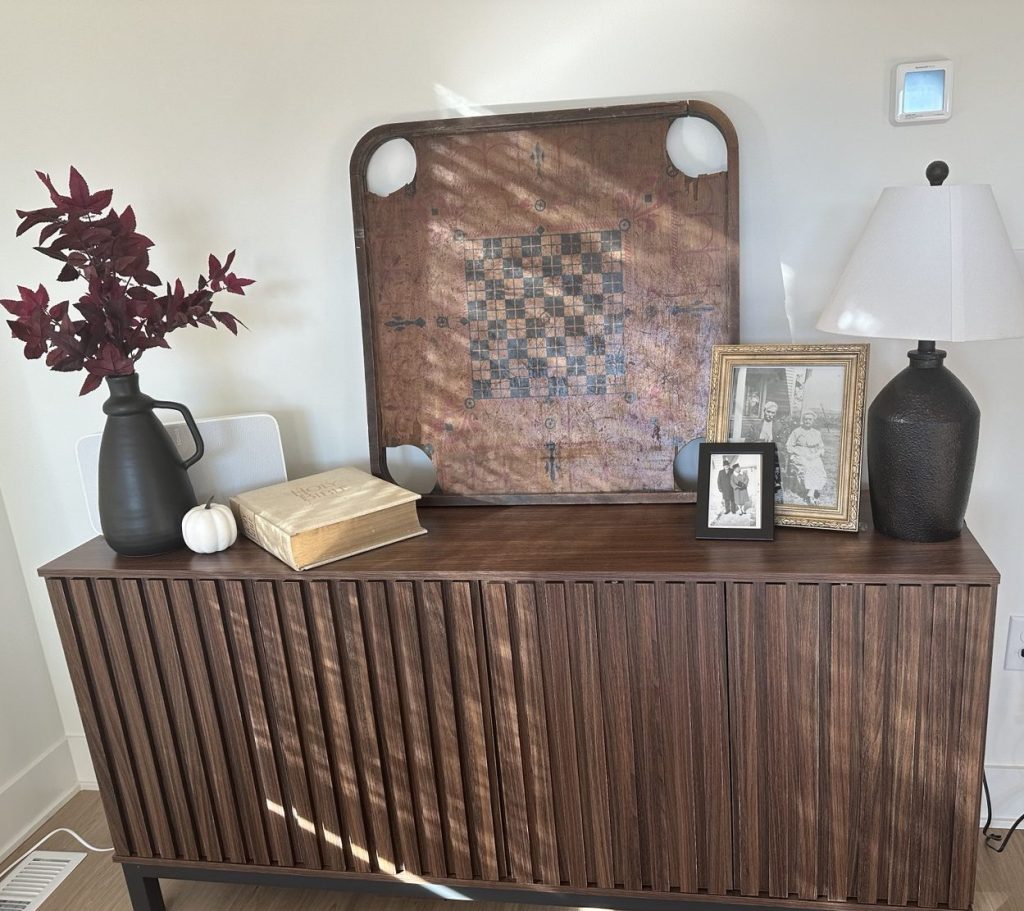
We also bought a walnut dining buffet for $224. It gave us additional storage and a place to display some of the things that make our home personal.
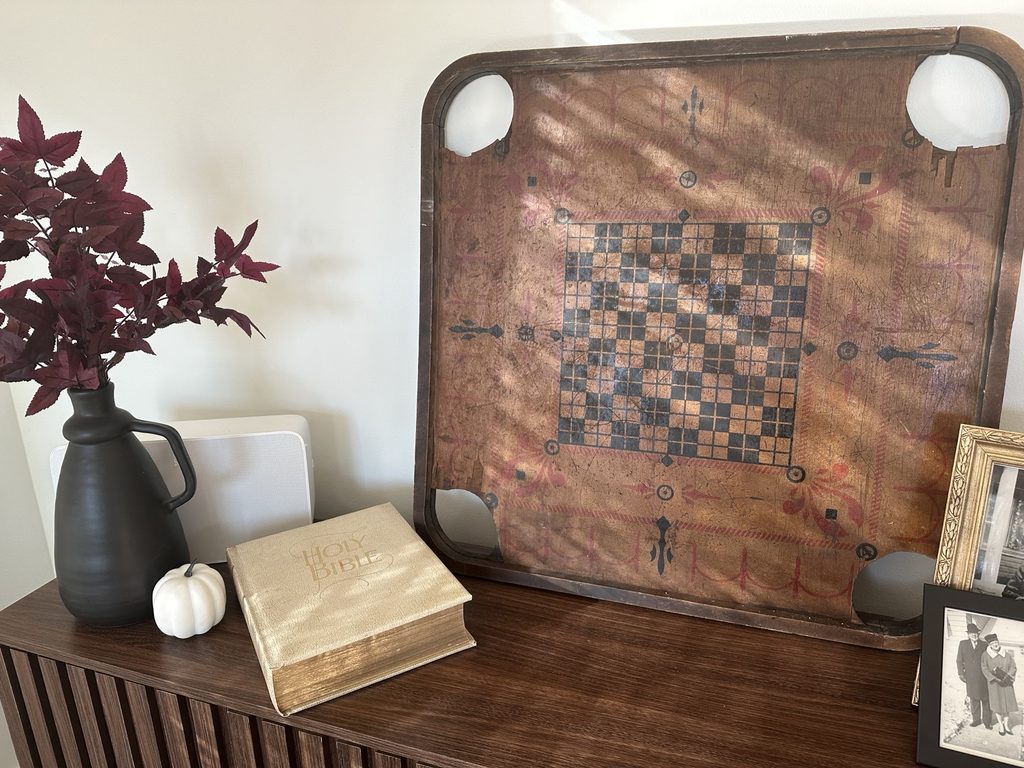
On top of the buffet are Brian’s family Bible, a gameboard that belonged to his grandma, and family photographs. Those aren’t things we’d replace just because a different accessory might look better in a decorating magazine.
They have a history, and they mean something to us.
That’s part of what I want our home to be: a space that looks pulled together but still reflects the people who live here. I don’t want it to look like a furniture showroom. I want it to feel like home.
The Entryway: Small Details That Make a Difference
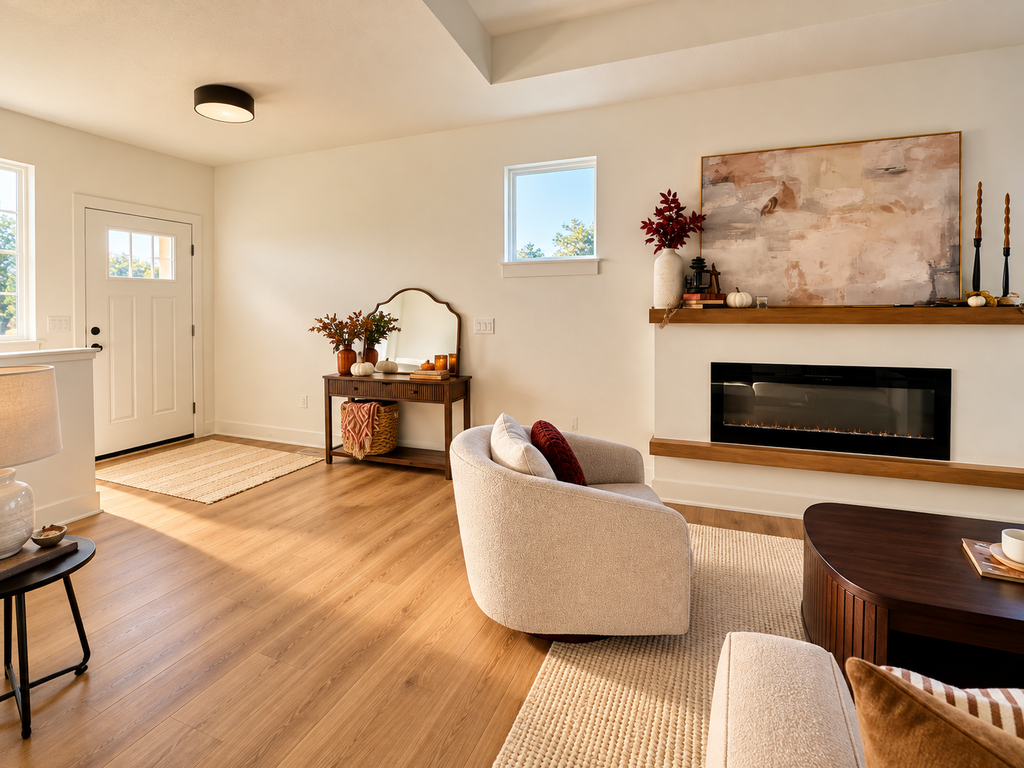
We also furnished the entryway with two pieces.
The entryway table from Amazon cost $133, and the Elden wood bench with a loose cushion from Target cost $240.
These weren’t the biggest purchases on our list, but they helped make the entrance feel more finished and functional.
It’s easy to focus on the large pieces when you’re furnishing a home, but smaller areas matter too. The entryway is one of the first places you see when you come inside, and having a place to sit or set things down can make everyday life a little easier.
We didn’t need elaborate decor or a lot of accessories. We wanted the space to feel welcoming and useful.
What We Actually Spent
Here’s the breakdown of the purchases discussed in this article.
| Item | Cost |
|---|---|
| Two West Elm Imogene swivel chairs | $2,115.00 |
| Ashley Larimer queen sleeper sofa | About $350.00 |
| Ashley Korestone lift-top coffee table | About $500.00 |
| Four Armen Living Amelia bar stools | $903.96 |
| Large living room rug from Homemakers | About $500.00 |
| Smaller dining-area rug from HomeGoods | About $120.00 |
| Walnut dining buffet | $224.00 |
| Entryway table from Amazon | $133.00 |
| Elden wood bench from Target | $240.00 |
| Total for listed purchases | About $5,085.96 |
Some of these amounts are approximate, so it’s best to think of the total as roughly $5,086.
This is the total for the purchases listed above, not necessarily every dollar spent furnishing the entire home. We also kept our existing dining table and chairs, which meant we didn’t have to buy replacements.
Looking at the total, I can see how quickly furnishing a home adds up. But I can also see where our money went and why we made the choices we did.
We spent more on the chairs because comfort was important to us. We benefited from a great deal on the sofa. We kept furniture that still worked. And we took our time looking for bar stools that fit the overall space.
None of those decisions was especially complicated on its own, but together they helped us create a home that feels more intentional.
What We Learned Along the Way
Looking back, there are a few things I’d do again.
1. Think about connected spaces as a whole.
If you have an open floor plan, consider how furniture, colors, and textures will look together. You don’t have to buy everything at once, but having a general vision can help you avoid purchases that don’t work with the rest of the space.
2. Decide where comfort matters most.
For us, the swivel chairs were worth spending more on. We use our living room, and we wanted those chairs to be comfortable. Your priorities might be different. The important thing is knowing what matters to you before you start shopping.
3. Let a good deal create flexibility.
The sofa deal gave us more room in the budget for the chairs. We didn’t save money on every single item, but we considered the purchases together rather than treating each one as an isolated decision.
4. Be patient when you’re looking for the right piece.
The bar stools took more effort to find than we expected. It would have been easy to buy something that was simply available, but we wanted the pieces in our open space to work together. Waiting helped us stay closer to the vision we had for our home.
5. Keep what still works—and what means something.
Our dining table and chairs didn’t need to be replaced. The family Bible and grandma’s gameboard weren’t just decorative objects to us. Keeping useful and meaningful things helped our home feel personal instead of starting from scratch with everything.
6. Remember that a finished home doesn’t have to be perfect.
We wanted our home to feel warm, comfortable, and cohesive. That doesn’t mean every corner has to be styled or every purchase has to be expensive. The goal was to create a space that works for our family and feels good to live in.
The Worth It Test
Was spending approximately $5,086 on these furnishings worth it?
For us, I think so.
We made a conscious decision to budget for new furniture when we moved. We prioritized the pieces that mattered most, took advantage of a good deal, and kept items we already owned when they still worked.
We didn’t spend the same amount on every part of the room, and we didn’t buy things just to fill space. We wanted furniture that worked together, felt comfortable, and would serve us well over time.
Would everyone need to spend this much to create a home they love? Absolutely not. Your budget, your home, and your priorities may look completely different from ours.
But for us, the investment was about more than the furniture itself. It was about creating a home where we could relax, spend time together, welcome family and friends, and surround ourselves with things that have meaning.
And that, to us, is what makes it worth it.
Our Worth It Test: 5 out of 5 stars — Absolutely worth it.
Not because we bought the most expensive furniture, or because every purchase was perfect, but because we made choices that fit the way we wanted to live.
That’s what we’re trying to do with Worth the Making: figure out what’s worth the time, money, and effort—and be honest about what isn’t.
If you’re looking for ways to make your home feel more welcoming without adding to your shopping list, read our guide to making your home feel welcoming without buying more stuff.