Tag: Intentional Living

  • How to Make Your Home Feel Welcoming Without Buying More Stuff.

    How to Make Your Home Feel Welcoming Without Buying More Stuff.

    Creating a home that feels stylish, comfortable, and unmistakably you.

    I want people to walk into our home and think two things: This is stylish. And I could get comfortable here.

    I love when someone notices a piece of decor and says, “Oh, that’s cute. I want that at my house.” But I also want them to feel at home—to relax, pull up a chair, grab something to eat, and stay awhile.

    For me, those things go together. A home can be thoughtfully decorated without feeling untouchable. It can look put together without feeling like nobody is allowed to live in it.

    And creating that feeling doesn’t always require buying something new.

    Sometimes, it comes down to understanding what you want your home to feel like and making intentional choices that support it.

    Start With the Feeling, Not the Shopping

    Before thinking about furniture, throw pillows, seasonal decor, or the latest home trend, I think it’s worth asking a different question:

    How do I want people to feel when they walk through my door?

    For me, the answer is comfortable, peaceful, and welcome—with a little style mixed in.

    I want our home to feel like us. I want the spaces to look cohesive, but I also want people to see pieces that have meaning and tell a little of our story.

    That means our home isn’t built around one particular trend. Our style leans organic modern, with clean lines and nostalgic pieces that mean something to us.

    Other people might love antique country, dark traditional rooms, bold colors, or something completely different. None of those styles is automatically more welcoming than another.

    The point is knowing yourself well enough to create a space that feels authentic.

    When your home reflects who you are, it feels less like a room you’ve decorated for other people and more like an invitation into your life.

    Light Can Change the Entire Mood of a Room

    During the day, we have big windows that let natural light into the house. I love having that sunshine fill the space.

    At night, I take a different approach. Instead of relying on bright overhead lighting everywhere, I prefer soft lighting from lamps and side lights. It creates a calmer feeling and makes the space feel more relaxed.

    It’s a small distinction, but it changes how a room feels.

    You don’t necessarily need new fixtures or an expensive lighting makeover to try it yourself. Start with what you already have. Open the curtains during the day. Turn on a lamp in the evening. Notice how the room feels when you change the lighting.

    Sometimes, the simplest adjustment makes a space feel more inviting.

    Don’t Underestimate the Little Things You Notice With Your Senses

    A welcoming home isn’t only about what you see.

    I use a diffuser with essential oils to bring seasonal scents into our home. It’s one of the ways I like to make the atmosphere feel right for the time of year.

    Music is another part of it. We change things up depending on the mood, but our usual mix includes country, music from the ’80s and ’90s, and soft rock.

    These aren’t complicated design decisions. They’re simply things that make the house feel like ours.

    You might prefer a favorite candle, a playlist you always have on in the background, fresh flowers, or the smell of something cooking in the kitchen. You might prefer a quiet house with no added fragrance or music at all.

    There isn’t one right answer.

    The idea is to pay attention to the details that make you and the people around you feel comfortable.

    Make Room for People to Actually Live There

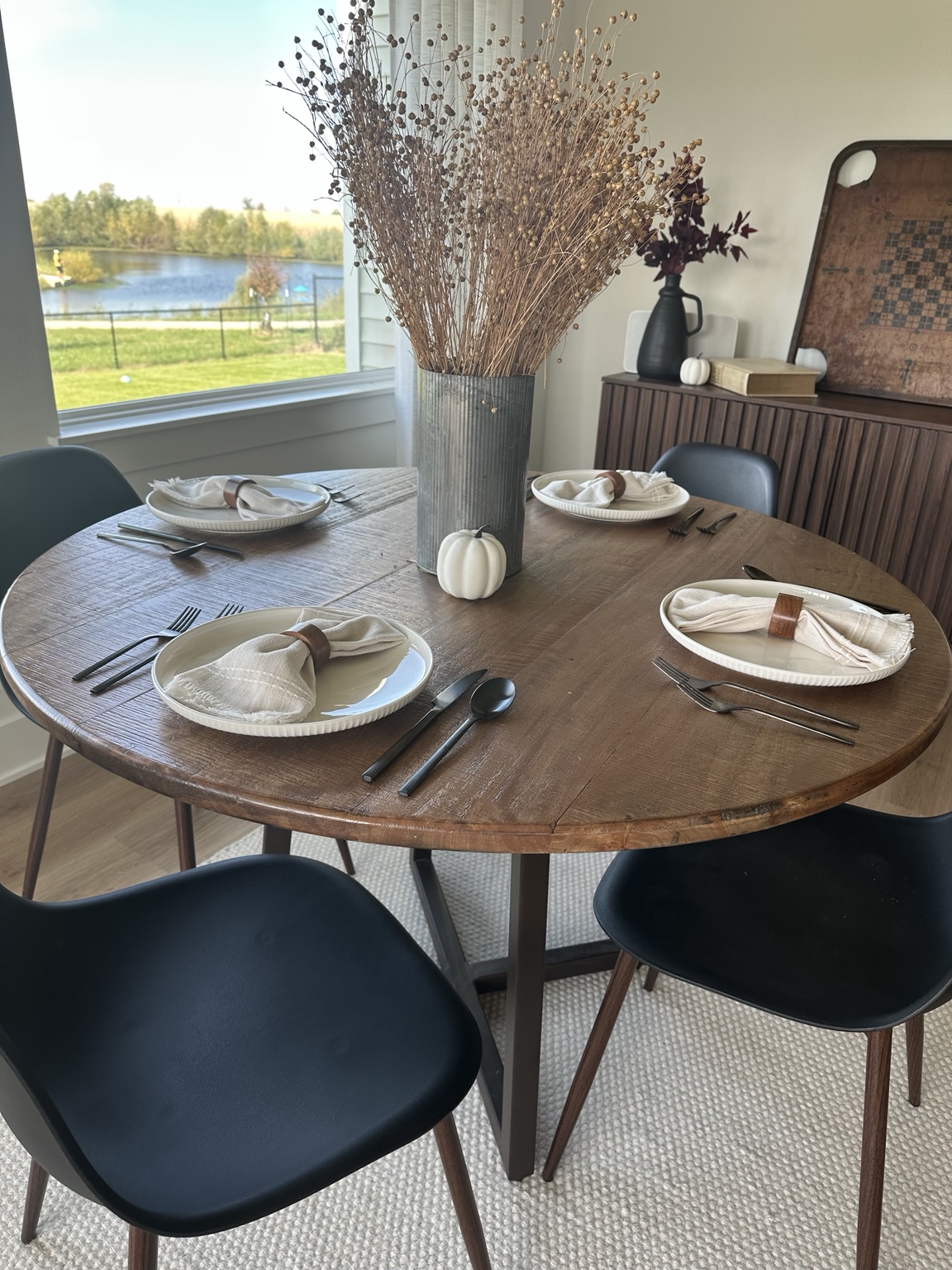
    For us, food has always been an important part of bringing people together. Some of my favorite parts of having people over happen around a meal, whether we’re sitting at the dining table, gathering around the big kitchen island, or settling into the living room.

    That’s one reason the layout of our home matters to me.

    Our main living area has an open floor plan connecting the living room, dining area, and kitchen. It gives people room to spread out while still feeling like they’re part of the same gathering.

    We also have a large living room in the basement, and we’re renovating it to include a bar area. That will give us another place to gather and more room when we have people over.

    The common thread isn’t a particular floor plan or a certain amount of square footage. It’s thinking about how you actually use your home.

    Do people have somewhere comfortable to sit? Can they join a conversation without feeling separated from everyone else? Is there room to share a meal, watch a game, or simply spend time together?

    A beautiful room is one thing. A room that makes it easy to enjoy being together is something else entirely.

    When you’re deciding what your home needs, consider the experiences you want to create before deciding what to buy.

    Sometimes, Buying the Right Thing Is Worth It

    The idea of creating a welcoming home without buying more stuff doesn’t mean never spending money on your home.

    Sometimes, the right purchase makes a meaningful difference.

    One thing we’ve learned is how much it matters to choose furniture with the whole space in mind.

    In our previous home, we purchased furniture in a more fragmented way. We chose individual pieces, but they didn’t always work together as one cohesive area.

    When we chose furniture for our current space, we spent more time considering how everything would fit together. Because our main living area is open, we wanted the furniture to feel connected rather than like separate rooms that happened to sit next to one another.

    That planning helped us create the feeling we wanted.

    For us, that was worth the extra thought and effort. Instead of simply buying something because we liked it on its own, we considered how it would work with everything around it.

    That’s an approach you can use whether you’re furnishing an entire room or adding one small piece.

    Before making a purchase, ask yourself:

    • Does this work with what I already own?
    • Does it support the way I use this space?
    • Do I genuinely love it, or do I just like the idea of having it?
    • Will it help create the feeling I’m trying to achieve?

    Sometimes, the answer will be yes, and the purchase will be worth it. Other times, you may realize that what you already have is enough.

    Both are good outcomes.
    The Pieces That Make a House Feel Like Yours

    Some of the most meaningful things in our home aren’t things we bought to decorate a room. They’re things that were already part of our story.

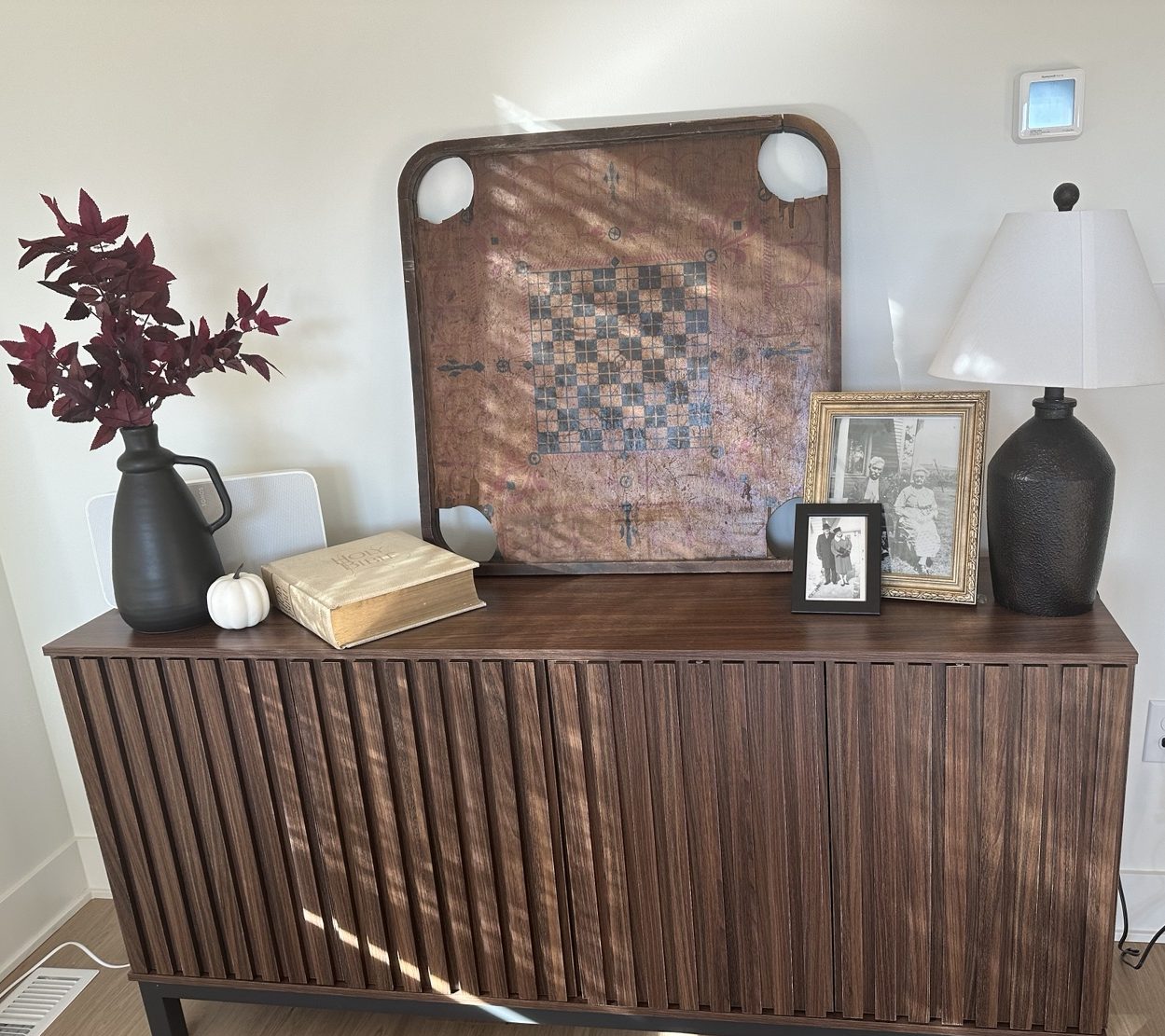
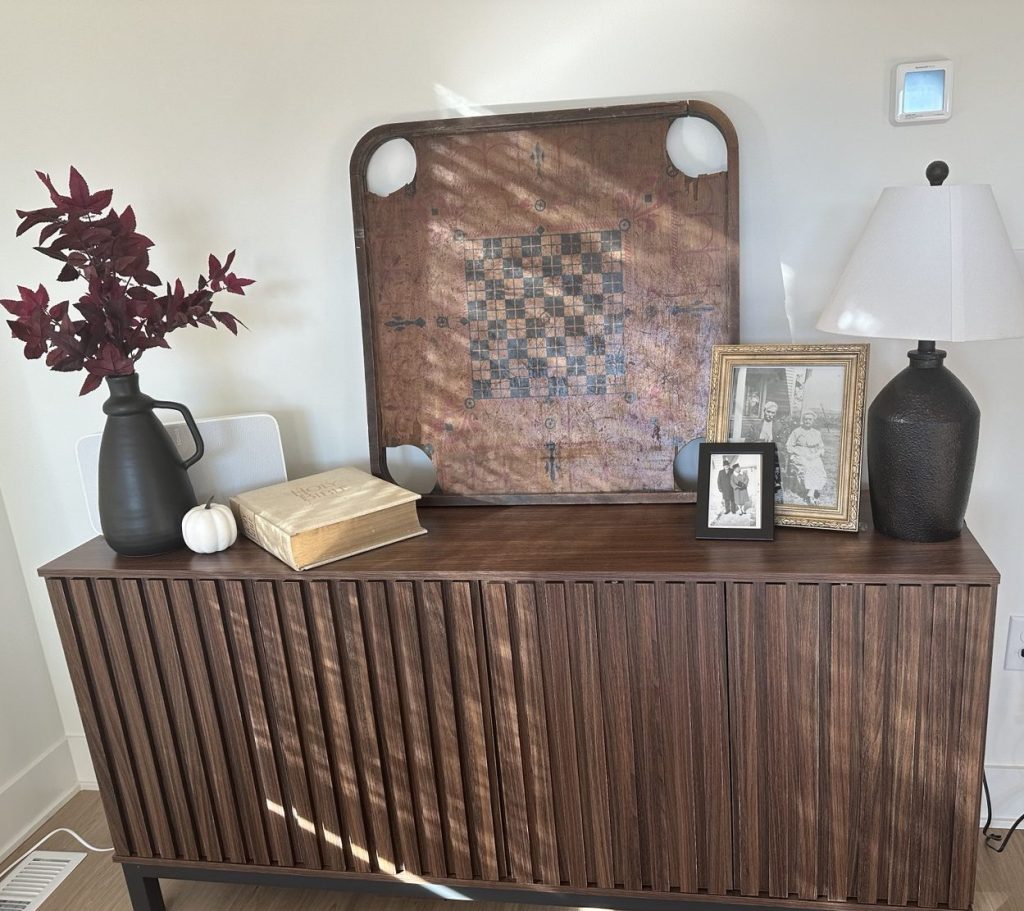
    On our buffet, we have Brian’s family Bible, which has been passed down through his family, and a gameboard that belonged to his grandma. We paired them with a modern buffet, a lamp, and a small Sonos stereo. The furniture gives the space a clean, modern look, while those family pieces bring history and meaning into the room.

    When we chose what would sit on that buffet, we didn’t just look for things that matched. We chose things that meant something to us.

    Those pieces bring a sense of history into a room that might otherwise feel entirely new. They remind us that a home can reflect both the style we love today and the people and traditions that came before us.
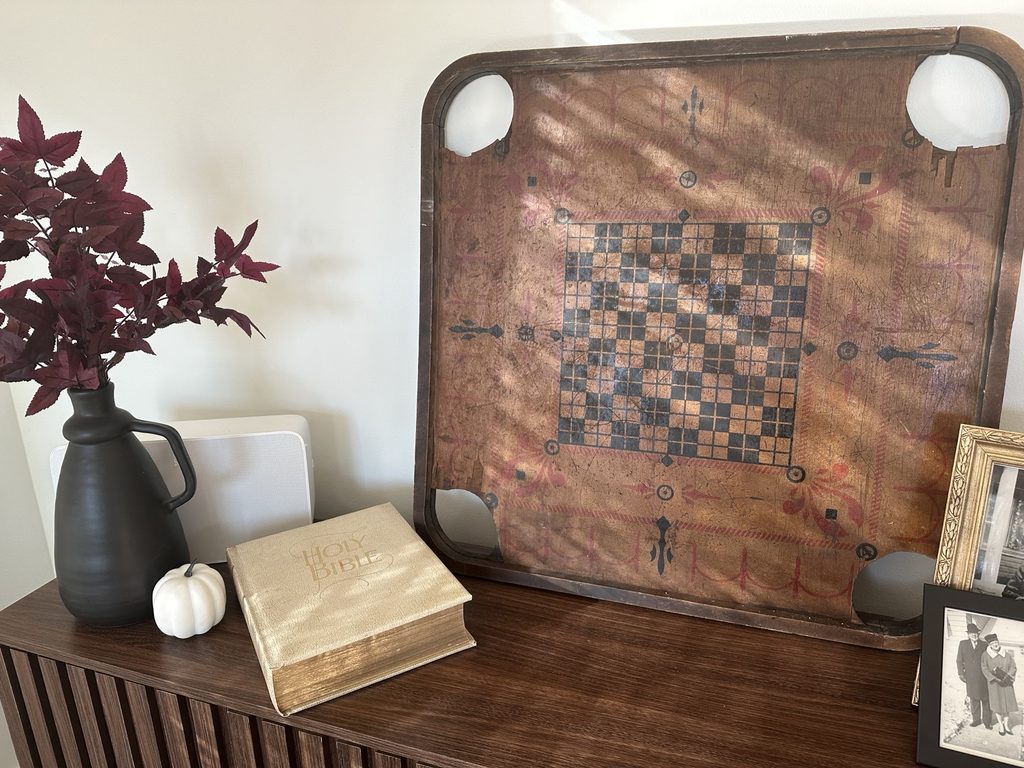
    I love that combination. The modern pieces reflect the style we enjoy, while the nostalgic ones connect our home to the people and memories that helped shape our lives.

    And I think that’s an important part of making a home feel welcoming. It doesn’t have to look like everything came from the same store or was chosen to match a particular trend. Sometimes, the pieces that mean the most are the ones that have been with your family for years.

    You can have clean lines and modern furniture alongside family heirlooms, collected treasures, and things that might not fit a traditional decorating formula. When those pieces have meaning, they help tell your story.

    Your home should look like you, but it should also hold a little of where you’ve come from.

    That’s what makes it personal. And to me, that’s worth keeping.

    A Few Ways to Make Your Home Feel More Welcoming Today

    You don’t need a renovation budget or a shopping trip to start making your home feel more inviting.

    Here are a few things worth trying:

    Let in the natural light. Open the curtains and see how the room feels with more daylight.

    Change the lighting after dark. Try lamps or side lights for a softer, more relaxed atmosphere.

    Put on music you enjoy. Let your home sound like you, whether that’s country, classic rock, jazz, or something else entirely.

    Clear space for people. Move things around if needed so there’s room to sit, talk, eat, or gather comfortably.

    Bring out something meaningful. A sentimental object, a family photograph, or a piece you’ve had for years can add more personality than another trendy accessory.

    Think about how you use the room. If everyone gathers in the kitchen, make that space comfortable. If you love hosting movie nights or watching the game, make room for that.

    Pause before buying something new. Ask whether it solves a real problem or supports the feeling you’re trying to create.

    None of these ideas requires a perfect home. They’re simply ways to be more intentional with the space you already have.

    The Worth It Test

    Does making your home more welcoming require buying more things?

    Not necessarily.

    Sometimes, a purchase is worth it because it improves how a room functions or helps bring a space together. Sometimes, the better choice is to rearrange what you own, change the lighting, make a meal, or create more room for people to gather.

    For me, the goal isn’t to have a home that looks perfect. It’s to have a home that feels like us—and where the people we care about feel comfortable being themselves, too.

    If a new purchase helps you create that feeling, it may be worth it. If you’re buying something simply because you think your home needs to look like everyone else’s, it may be worth reconsidering.

    The best home isn’t necessarily the one with the most stuff. It’s the one that feels right for the life you’re living.

    Because a welcoming home isn’t just something you decorate.

    It’s something you make.
  • What Does ‘Worth It’ Actually Mean?

    What Does ‘Worth It’ Actually Mean?

    Worth it doesn’t mean cheap. It doesn’t mean expensive. And it definitely doesn’t mean everyone else thinks it’s worth it.

    For us, worth it is a much simpler question:

    Did it make the time, money or effort we put into it feel worthwhile?

    Sometimes the answer is yes.

    Sometimes it’s absolutely not.

    And sometimes something costs more than we planned, takes longer than we expected or requires more work than we thought it would—but when we’re finished, we’re still glad we did it.

    That’s worth it, too.

    We started Worth the Making because we think there are a lot of decisions in everyday life that deserve a little more thought than “Is this the cheapest option?” or “Is this what everyone else is doing?”

    What should we make for dinner?

    Is that purchase actually worth the money?

    Is this project worth the time?

    Is a weekend trip worth the expense?

    Is hosting people at home worth the work?

    Sometimes the answer is yes. Sometimes it’s no. And sometimes the answer is it depends.

    That’s what we’re here to figure out.

    Worth It Isn’t the Same as Cheap

    To us, something is worth it when we can look back and say, “I’m glad we did that.”

    Maybe it created a memory we’ll talk about for years. Maybe it gave us a feeling we didn’t know we needed. Maybe it brought people together around a table. Maybe it was a trip we’ll still talk about ten years from now.

    And sometimes, it’s something as simple as the way a room feels when people walk through the door.

    We want our home to feel like a place where people can walk in, take their shoes off, open the refrigerator and make themselves at home. A place where nobody feels like they’re imposing or that everything has to be perfect before they arrive.

    Our home is where friends turn into family, where ordinary moments become memories that last lifetimes.

    That’s also what we want the things we bring into our home to create.

    The decorations we choose aren’t just about making a room look pretty. We want them to create a feeling—peace, calm, warmth and welcome.

    The food we make isn’t just about putting dinner on the table. It’s about what happens when people sit down together.

    The trips we take aren’t just about seeing somewhere new. They’re about the stories we’ll tell when we get home.

    And the celebrations we create aren’t about making everything look perfect. They’re about giving people a reason to gather and making the day feel special.

    That’s what worth it means to us.

    It’s not necessarily about what something costs. It’s about what it creates.

    It’s About Knowing What Matters Most

    We don’t think something is a waste of money just because it costs more than the cheapest option. And we don’t think something is automatically worth buying just because it’s beautiful, popular or on sale.

    We think it depends on what you’re trying to create.

    Take Brian’s birthday party, for example.

    We didn’t go out and buy a bunch of decorations or spend money on an elaborate theme. Not because we don’t enjoy decorating—we absolutely do. There are parties where we’ll go all out with the decorations and theme because creating that atmosphere is part of what makes the occasion special.

    But for this particular birthday, that wasn’t where we wanted to spend our money.

    We wanted good food, a relaxed gathering and time with the people we love. So we put most of our budget toward the food and kept everything else simple.

    And it worked.

    We didn’t feel like anything was missing because we hadn’t spent money on decorations. We had what we wanted: a house full of people, plenty of food and a reason to spend the day together.

    That’s the difference between simply spending less and spending intentionally.

    It’s not about asking, “How can we make this cheaper?” It’s about asking, “What matters most to us this time?”

    Sometimes the answer will be beautiful decorations. Sometimes it will be a really good meal, a weekend away or a little extra money spent to make someone feel special.

    The answer can change from one occasion to the next. That’s okay.

    The goal isn’t to spend as little as possible. It’s to spend our time, money and effort on the things that actually make a difference to the experience we want to create.

    How We Decide If Something Is Worth It

    We don’t have a complicated formula for deciding whether something is worth it. And we don’t think there is one right answer for everyone.

    What feels worthwhile to us might look completely different from what matters to someone else.

    But there are a few questions we come back to when we’re deciding where to spend our time, money and effort.

    1. What Are We Really Trying to Create?

    Before we spend money, we try to think about what we actually want from the experience.

    If we’re hosting a birthday party, do we want an elaborate theme and beautiful decorations? Or do we want a relaxed afternoon with good food and people we love?

    If we’re decorating a room, are we trying to make it look a certain way, or are we trying to create a space that feels peaceful, comfortable and welcoming?

    Those aren’t always the same thing.

    When we know what we’re trying to create, it’s easier to decide where our money and effort will make the biggest difference.

    2. Will It Make the Experience Better?

    Not everything that looks good on paper actually makes an experience better.

    A more expensive ingredient might make a meal memorable. A thoughtful decoration might completely change the feeling of a room. A carefully planned trip might give us memories we’ll talk about for years.

    But sometimes the extra expense doesn’t add much at all.

    We try to ask ourselves whether the additional cost, time or effort will genuinely improve the experience—or whether we’re doing it simply because we think we’re supposed to.

    3. How Will We Feel About It Later?

    This is one of the biggest questions for us.

    Will we remember the experience? Will it make someone feel loved or welcome? Will we be glad we made the effort?

    Not everything has to create a lifetime memory to be worthwhile. Sometimes the value is in an ordinary Tuesday dinner, a comfortable room at the end of a long day, or a slow morning spent together.

    But we want the things we put our resources into to contribute something meaningful to our lives.

    4. Is There a Better Place for That Money or Effort?

    Every decision involves a trade-off.

    Spending more on one thing usually means spending less—or giving up something else—somewhere along the way.

    For Brian’s birthday, we chose to spend most of our budget on food instead of decorations. That made sense for the kind of gathering we wanted.

    For another celebration, we might make a completely different choice.

    The point isn’t to find the cheapest option. It’s to decide what deserves our resources most in that particular moment.

    5. Would We Do It Again?

    Sometimes we don’t know whether something is worth it until we’ve tried it.

    Maybe a purchase doesn’t live up to expectations. Maybe a project takes twice as long as we planned. Maybe a trip costs more than we thought but gives us an experience we’d never trade.

    Looking back honestly helps us make better decisions the next time.

    Would we do it again? Would we spend the money again? Was the result worth the effort?

    And if the answer is no, that’s useful information, too.

    Being honest about what wasn’t worth it helps us recognize what is.

    The Worth It Test

    We don’t think every decision needs a spreadsheet, a pros-and-cons list or hours of research. Sometimes you just need to step back and ask whether something delivered what you hoped it would.

    That’s why we created The Worth It Test—a simple way to look honestly at the things we try, buy, make and experience.

    Here’s how we rate them:

    ★★★★★ Absolutely worth it

    It delivered what we hoped for, created something meaningful, or made the experience better in a way we’d gladly choose again.

    ★★★★☆ Worth it, with caveats

    We’re glad we did it, but there are a few things we’d change next time.

    ★★★☆☆ It depends

    There were good parts, but whether we’d recommend it depends on your priorities, budget or circumstances.

    ★★☆☆☆ Probably wouldn’t do it again

    The cost, effort or result didn’t quite justify the experience for us.

    ★☆☆☆☆ Save your money

    It didn’t deliver enough value to justify what we spent. We’d choose differently next time.

    These ratings aren’t about telling everyone what they should value. They’re about sharing what we learned so you can decide what’s worth it for you.

    Because what works for our family, our home and our budget might not be the right choice for yours.

    And that’s perfectly fine.

    A Good Life Is Made Up of More Than Things

    When we think about the things that matter most to us, they usually aren’t the things we spent the most money on.

    They’re the meals we shared. The people who felt comfortable enough to open our refrigerator without asking. The birthdays spent in our backyard. The quiet mornings together. The rooms that make us exhale when we walk through the door.

    Sometimes creating those moments takes money. Sometimes it takes time, planning and a little extra effort. And sometimes it means knowing what not to spend money on.

    We’re not trying to make every day extraordinary or turn every ordinary moment into a production. We’re simply trying to be more intentional about how we spend our resources and what we want our lives to feel like.

    That’s what Worth the Making is all about.

    We’ll share the recipes we make, the spaces we’re creating, the celebrations we host, the purchases we’re glad we made, the experiences we try and the things we probably wouldn’t do again.

    We’ll talk about what things cost, what they took to pull off, what we learned and whether we’d do them again.

    Not because we have everything figured out. We don’t.

    But because we believe a good life isn’t built by buying everything, doing everything or making everything look perfect.

    It’s built by choosing the things that matter to us and making room for more of them.

    Because it’s not necessarily about what something costs. It’s about what it creates.

    And that’s what makes it worth the making.