We took my dad to Yellowstone for his 81st birthday to help him experience a place he’d always dreamed of seeing. We came home with incredible memories, a new appreciation for America’s national parks, and a few things we’d do differently next time.
Some trips are about getting away. Others are about seeing somewhere new, checking a destination off your list, or finally visiting a place you’ve heard about for years.
And then there are the trips you take because someone you love has always dreamed of going somewhere.
For my dad, Jerry, that place was Yellowstone National Park.
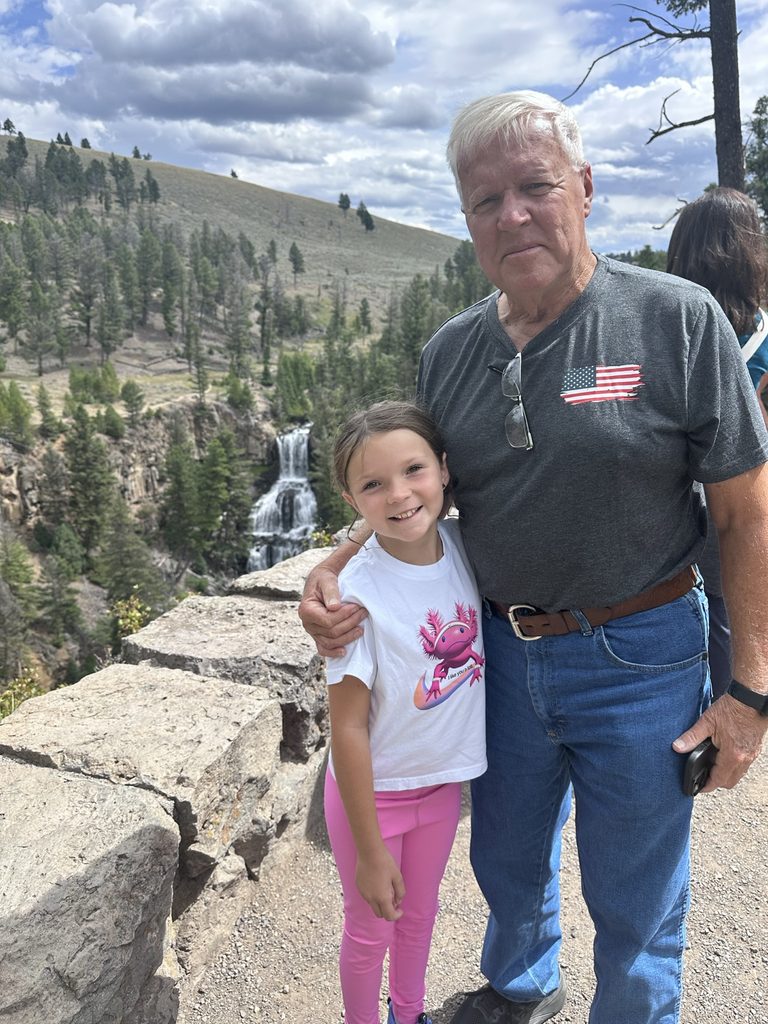
For his 81st birthday, our family decided it was time to make that dream happen. My mom, my brother and his family, my sister, my daughter Ryli, and I traveled west for a few days of exploring Yellowstone and Grand Teton National Park.
We saw waterfalls, wildlife, mountains, and landscapes that were almost hard to believe were real. We learned about the area’s remarkable geology, took a scenic boat tour, and enjoyed an Old West wagon ride and dinner.
But when I look back on the trip, what stands out most isn’t a particular attraction or even the breathtaking scenery.
It’s watching my dad experience a place he’d wanted to see for so long.
And that made the trip worth it before we even started calculating what it cost.
Getting There: A Family Trip to Remember
Our trip took place August 20–25, 2026.
We flew into Denver, caught a connecting flight to Bozeman, Montana, and had dinner in Bozeman before driving to our Vrbo near Yellowstone’s West Entrance in Island Park, Idaho.
We shared a vacation rental and coordinated transportation and activities across three families. Traveling with extended family takes planning, but splitting some of the larger expenses made the trip more manageable.
Having a home base near the park also worked well for us. We could make breakfast at the cabin, pack simple lunches, and spend our days exploring without having to eat every meal at a restaurant.
We spent Friday and Saturday exploring Yellowstone, then headed to Grand Teton National Park on Sunday. Monday was our drive back to Bozeman, where we stayed overnight before catching an early flight home Tuesday morning.
It was a full few days, but we managed to experience two incredible national parks in one trip.
The Beauty of Yellowstone Is Hard to Put Into Words
I’ve seen plenty of pictures of Yellowstone over the years, but seeing it in person is an entirely different experience.
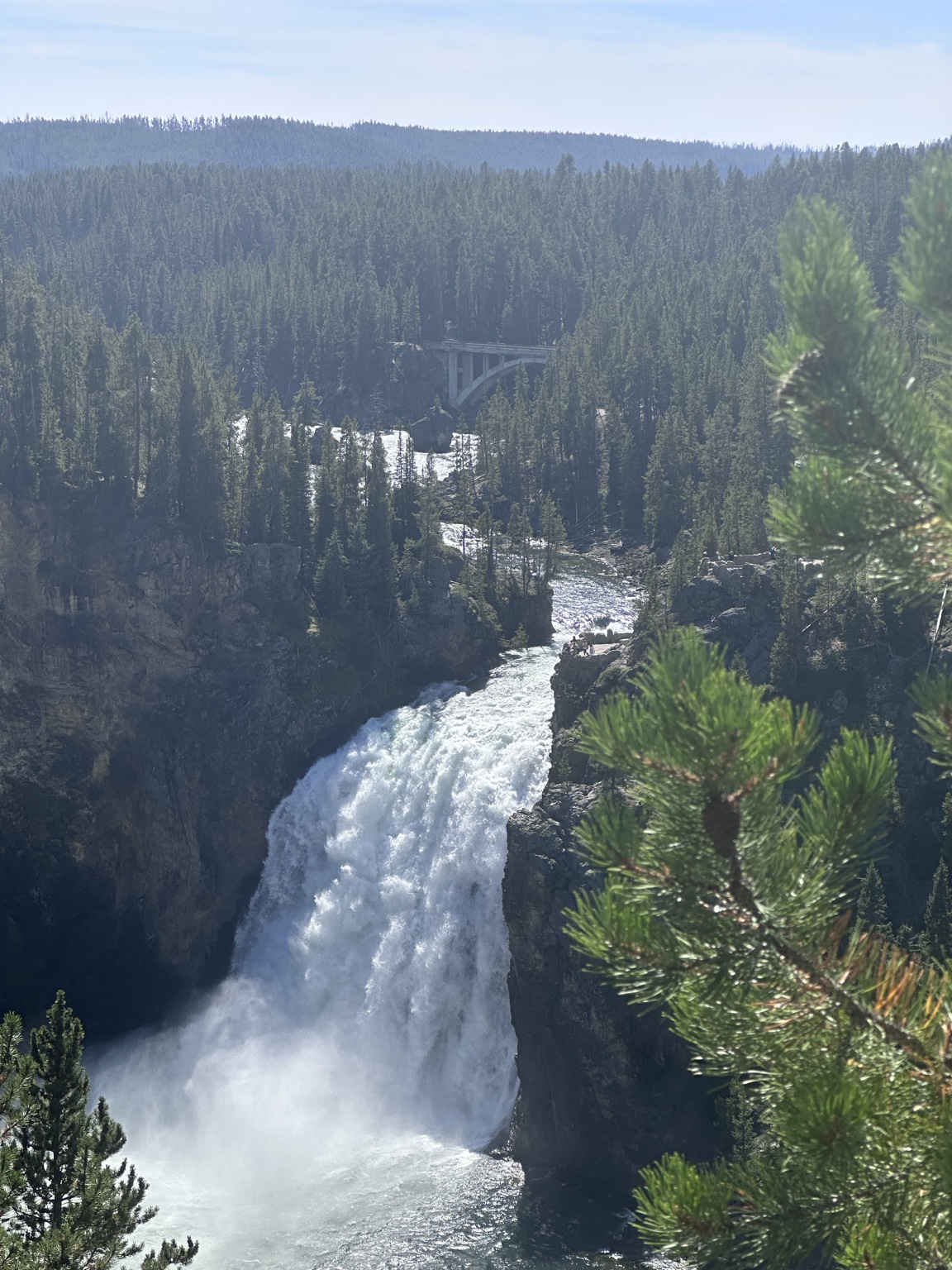
The waterfalls were among our favorite sights. There’s something about seeing the sheer volume of water moving through the landscape that photographs don’t quite capture.
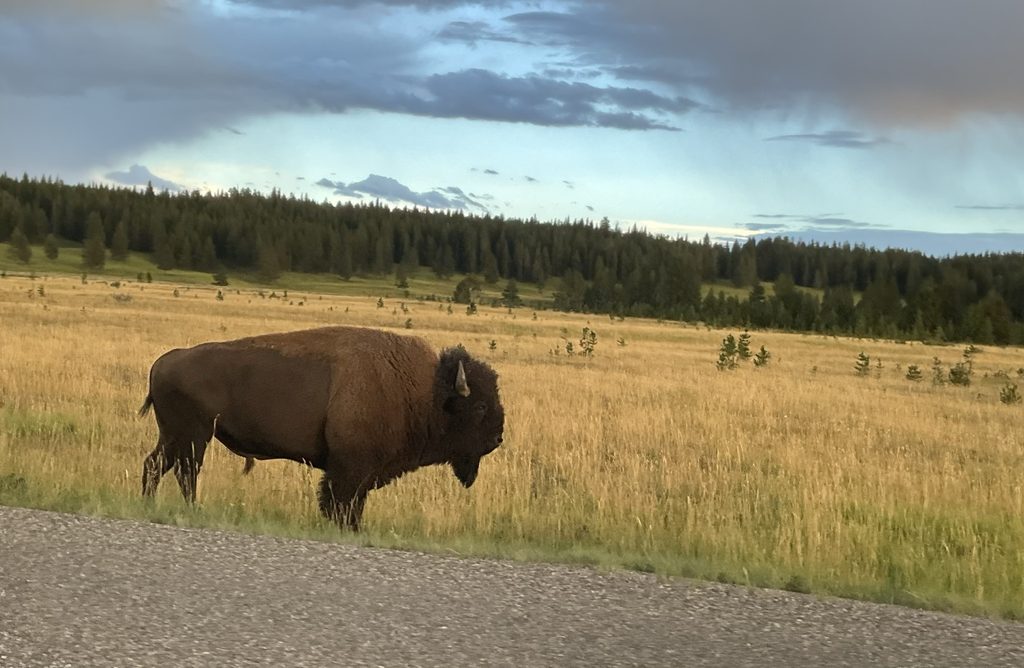
The wildlife was another highlight. Seeing animals in their natural surroundings, against a backdrop of mountains and wide-open scenery, reminded us just how extraordinary the natural world can be.
And then there were the mountains.
Everywhere we looked, there was something else to take in: the terrain, the colors, the water, and the sheer scale of the landscape.
Yellowstone was also fascinating from a geological perspective. The park sits above a vast volcanic system, and its geothermal features are part of what makes it so unique. Knowing that volcanic activity helped shape the landscape adds another layer to the experience.
It’s not simply beautiful. There’s a remarkable amount of history and natural science behind what you’re seeing.
You can spend your time admiring the scenery, or you can dig into the reasons it looks the way it does. We enjoyed both.
But the best part was watching my dad take it all in.
He was surrounded by the natural beauty he’d wanted to experience for years. Seeing how much he loved being there made the trip feel bigger than a vacation.
We weren’t just visiting Yellowstone. We were helping someone we love realize a dream.
And that’s a pretty special reason to go anywhere.
A Day at Grand Teton National Park
We didn’t limit the trip to Yellowstone.
On Sunday, we made the drive to Jackson, Wyoming, and visited Grand Teton National Park.
The Teton landscape offers a different kind of beauty. The mountains rise dramatically above the surrounding terrain, creating a backdrop that’s difficult to forget.
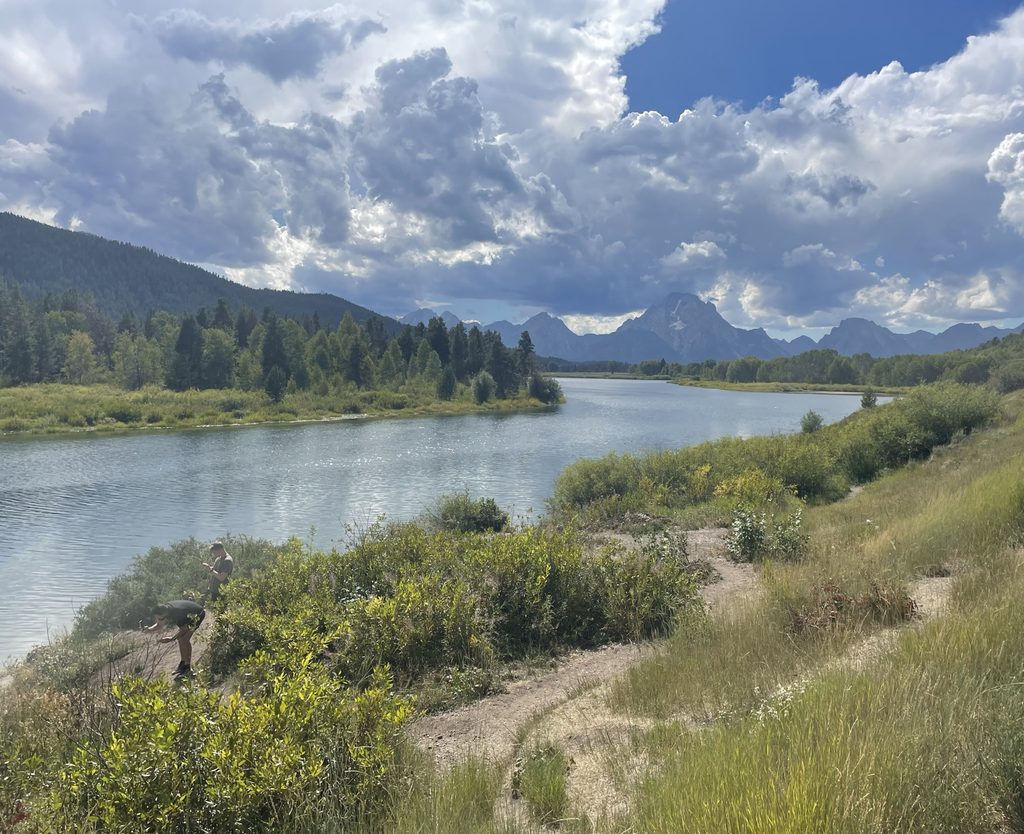
One of the highlights was our scenic boat tour on Jenny Lake.
Getting out on the water and seeing the mountains from that perspective was a wonderful experience. It gave us time to slow down, enjoy the scenery, and appreciate where we were.
The boat tour was absolutely worth doing.
There was just one thing I’d change about this part of the trip: I’d plan more time in Jackson.
We barely got to experience the town. We drove through, grabbed coffee, and headed to our boat tour. That was about it.
I’d love to go back, spend time walking around Jackson, explore the shops and restaurants, and enjoy the area without feeling like we were squeezing everything into one day.
If I were planning this trip again, I’d seriously consider staying in the Jackson or Jackson Hole area longer. I’d give Grand Teton another full day and make time to enjoy the town itself.
Sometimes the things you don’t have time to do become the best ideas for your next trip.
The Old West Wagon Ride and Dinner
Another memorable experience was the Old West wagon ride and dinner cookout offered through Yellowstone National Park Lodges.
This combined a horse-drawn wagon ride through Pleasant Valley with a western-style dinner. It gave us something different from our days of exploring the parks and added another experience to the trip.
If you’re planning a Yellowstone visit, it’s worth looking into the activities available beyond the main scenic stops. Just be sure to check schedules, availability, and pricing when planning your own trip.
You can find the details here:
What Did Our Yellowstone Trip Cost?
A trip to Yellowstone isn’t just the cost of getting into the park. You have to consider flights, lodging, transportation, food, activities, and all the little expenses that add up along the way.
Because we traveled with extended family, some expenses were split among three families. That helped make a trip of this size more manageable.
For this breakdown, I’m focusing on the estimated expenses for me and my daughter, Ryli—not the entire group’s expenses.
Our estimated expenses for two
| Expense | Estimated cost |
|---|---|
| Round-trip flights for two | $703.20 |
| Our share of the Vrbo | $1,227.33 |
| Our share of the rental car | $133.33 |
| Yellowstone entrance fee | $35.00 |
| Grand Teton entrance fee | $35.00 |
| Jenny Lake boat tour for two | $42.00 |
| Old West wagon ride and dinner for two | $168.39 |
| Food and groceries | $200–$250 |
| Estimated total | $2,544.25–$2,594.25 |
Our vacation rental cost $3,682 for the stay, divided among three families. The rental car cost approximately $400, also divided among the three families.
Our food costs are estimates. We made breakfast at the cabin, picked up sandwiches and other simple lunches while exploring, ordered pizza one night, and ate dinner out in Bozeman when we arrived and before heading home. We also made room for ice cream along the way.
Gas was paid for by my sister, so it isn’t included in our personal total. We also had a few small souvenir purchases that aren’t included in the estimate.
This isn’t a perfect accounting of every dollar, but it gives us a reasonable picture of what the trip cost for two people.
Our estimated expenses came to about $2,550–$2,600 for me and Ryli, before gas, souvenirs, and other small expenses.
That’s a meaningful amount of money. But the question isn’t whether the trip was inexpensive. It’s whether the experience was worth what we spent.
What We’d Do Differently Next Time
Even though we loved the trip, there are a few things I’d approach differently if I were planning it again.
I’d spend more time in Jackson.
We barely scratched the surface. I’d like to explore the town, enjoy the shops and restaurants, and experience more of the Jackson Hole area.
I’d give Grand Teton another day.
The boat tour was a highlight, and I would have loved more time to explore the park without feeling rushed.
I’d explore more of Montana.
I really liked the Bozeman area. It had a character that made me want to see more of it, and I’d happily plan another trip focused on exploring Montana.
As for Yellowstone itself, I feel like we saw so much of the park that I don’t necessarily feel the need to return just to do it all again.
That doesn’t mean I wouldn’t recommend going. Quite the opposite.
I think Yellowstone is a trip everyone should experience if they have the opportunity. Its natural beauty, wildlife, waterfalls, and geology make it a remarkable place to visit.
But I also believe that not every wonderful destination needs to become a place you return to repeatedly.
Sometimes the value is in experiencing it once, appreciating it fully, and moving on to the next adventure.
This trip also sparked something new for me: a desire to visit all of America’s national parks.
I’d love to see more of them, discover what makes each one unique, and experience more of the incredible landscapes this country has to offer.
In a way, Yellowstone didn’t just fulfill one dream for my dad. It started a new one for me.
The Worth It Test: Was Yellowstone Worth It?
At Worth the Making, we’re interested in a simple question: Is something worth the time, money, and effort it takes to make it happen?
For our family, Yellowstone absolutely passes that test.
Was it worth the money?
Absolutely. It was a significant expense, but sharing lodging and transportation costs helped. More importantly, the money paid for an experience we couldn’t recreate at home.
Was it worth the time?
Yes. We spent several days traveling, exploring, and experiencing two extraordinary national parks. We could have filled those days with other things, but this was time spent doing something meaningful together.
Was it worth the effort?
Yes. Traveling with a large family group takes coordination. There were flights, rental cars, schedules, meals, and activities to manage.
But the effort helped make an important birthday dream come true.
Would we do it again?
I’d absolutely recommend the trip to others.
Personally, I don’t feel a strong need to revisit Yellowstone itself, because I feel we experienced so much of what we wanted to see. But I’d return to the broader region in a heartbeat.
I’d spend more time in Grand Teton, explore Jackson properly, and discover more of Montana.
And I’d happily keep working toward my new goal of visiting all the national parks.
Our rating: ★★★★★ Absolutely worth it
Not because the trip was cheap. Not because we managed to see every attraction. And not because every part of the itinerary was perfect.
It was worth it because we experienced extraordinary natural beauty, spent meaningful time with family, and watched my dad enjoy a place he’d dreamed of visiting for years.
Those are the experiences that stay with you long after you’ve unpacked your suitcase.
Some Trips Are Worth Taking for Someone Else
When I think about Yellowstone, I think about the waterfalls, wildlife, mountains, and incredible beauty of the landscape.
I think about the boat tour at Jenny Lake, the Old West dinner, and the places I’d like to explore next time.
But more than anything, I think about my dad.
We took this trip because Yellowstone was somewhere he’d always wanted to see. Getting to watch him experience that natural wonder was one of the best parts of the entire trip.
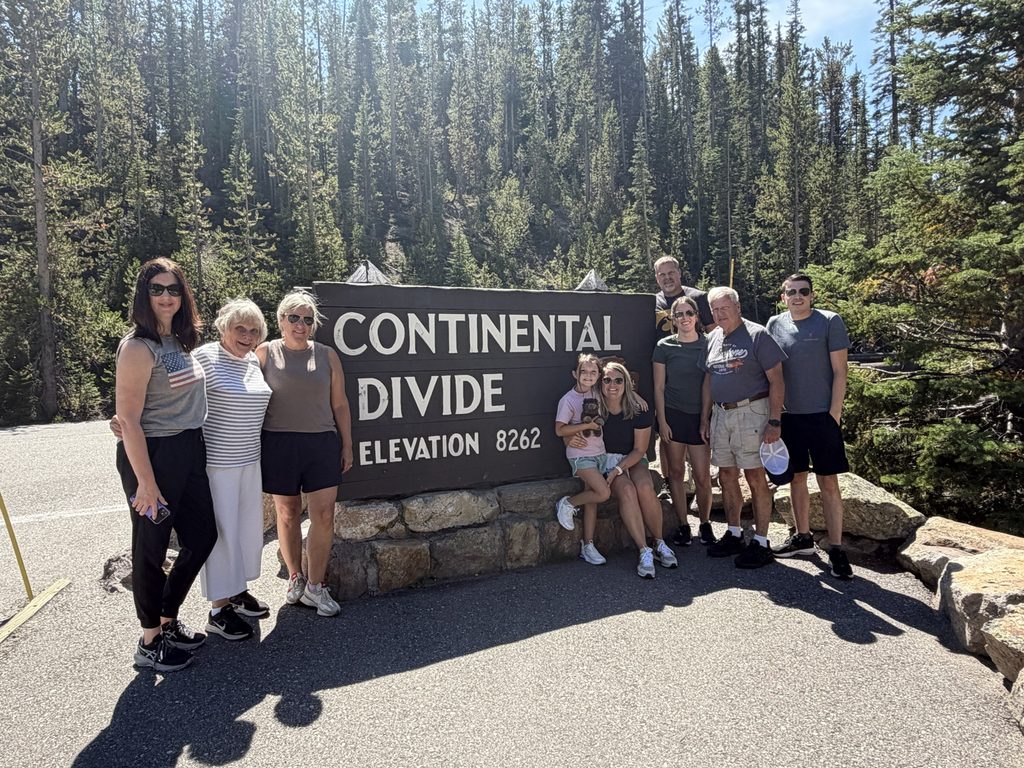
That’s something a price comparison can’t measure.
The trip cost money. It took planning. It required time and effort.
And I’d do it again.
Because sometimes the best reason to take a trip isn’t to check a destination off your list or get the most out of every dollar.
Sometimes it’s to help someone you love experience something they’ve always wanted to see.
And sometimes, that’s what makes it worth the making.