Tag: Worth the Making

  • When Apple Crisp Cheesecake Goes Wrong: A Little Reminder That Life Doesn’t Always Go to Plan

    When Apple Crisp Cheesecake Goes Wrong: A Little Reminder That Life Doesn’t Always Go to Plan

    I’m actually pretty good at making cheesecake.

    I say that not to brag, but because it makes what happened next a little harder to explain.

    Brian’s favorite dessert is apple crisp. And since I already make a pretty good cheesecake, I had what seemed like a brilliant idea: Why not combine the two?

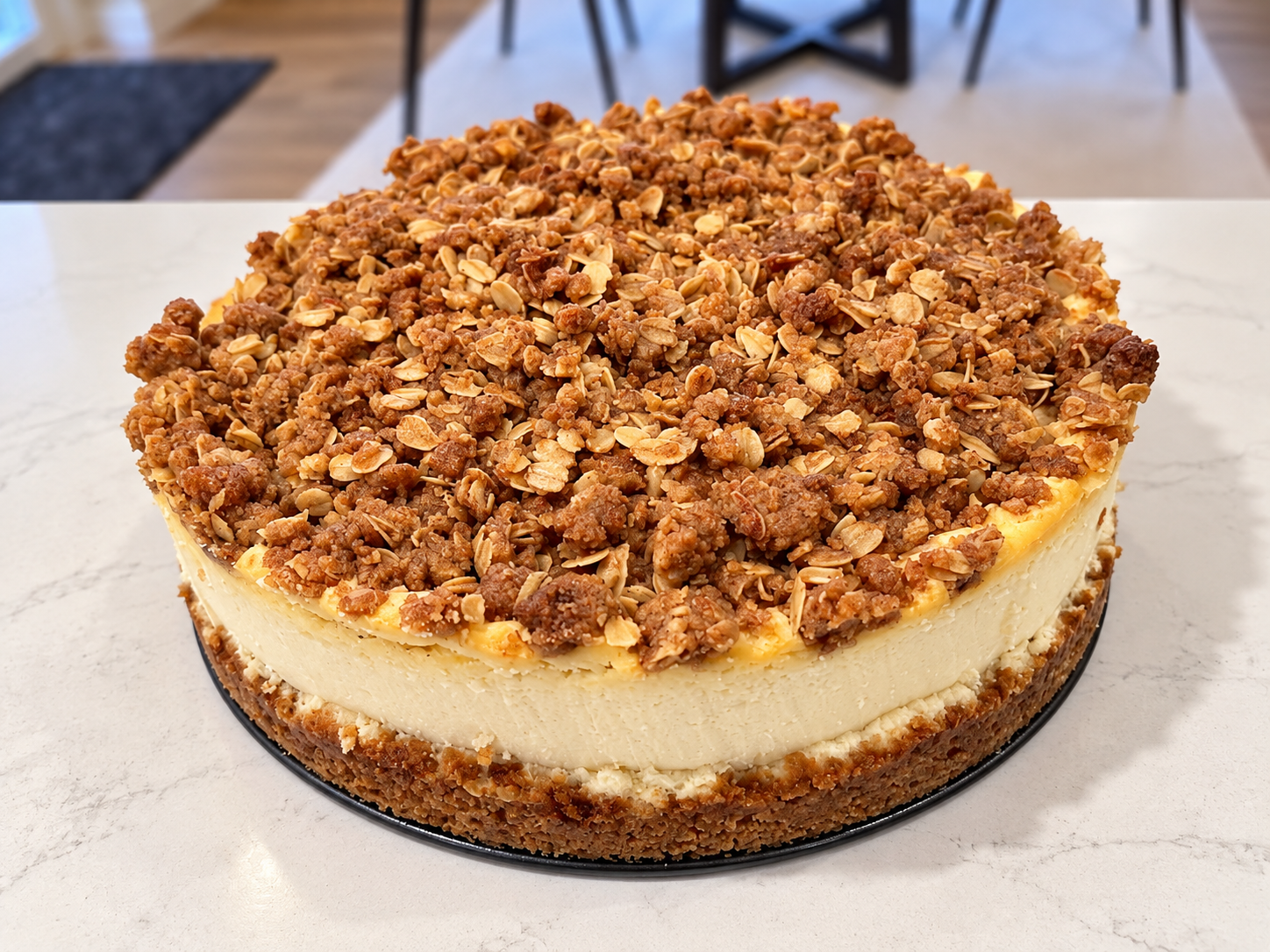
    Apple crisp cheesecake. Creamy cheesecake, thinly sliced apples, and that buttery, cinnamon-sugar crisp topping.

    In my head, this dessert was going to be fantastic.

    And honestly, from the outside, it looked pretty fantastic, too.

    A Dessert That Looked Like It Had Its Life Together

    I made my usual cheesecake recipe and added the apples and a crisp topping made with butter, flour, oats, and brown sugar.

    Everything went into the oven, and I waited for the magic to happen.

    When it came out, the top looked good. The apples and crisp topping looked like they belonged there. Nothing about the outside suggested that I was about to have a baking problem.

    Then I cut into it.

    The middle was basically soup.

    Not a little softer than expected. Not a little underdone. Soup.
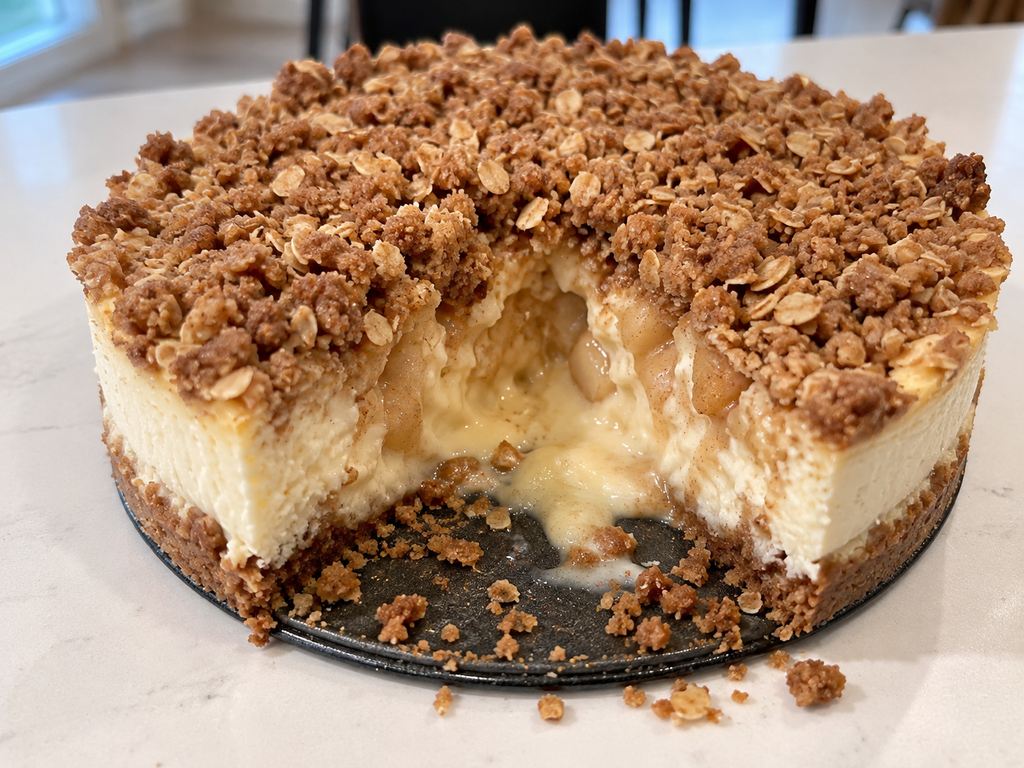
    The edges were done enough that we tried to salvage a few pieces, because wasting dessert is a hard thing to accept when you’ve put the time and ingredients into making it. But the center wasn’t going to cooperate, and eventually, the whole thing had to go.

    So much for my brilliant idea.

    I still don’t know exactly what went wrong. Maybe the added apples and topping affected how the cheesecake baked. Maybe the combination needed a different approach. Whatever the reason, my usual cheesecake recipe wasn’t enough to make this particular experiment work.

    And that happens sometimes.

    When Things Don’t Turn Out the Way You Planned

    It’s funny how a failed dessert can remind you of something bigger.

    We make plans. We put in the time. We gather the ingredients, follow the steps, and picture how everything is going to turn out.

    Sometimes it works beautifully.

    And sometimes you cut into the cheesecake and discover that the middle is soup.

    Life does that, too.

    You can make a thoughtful plan, do what you believe are all the right things, and still end up with a result you didn’t expect. A project doesn’t work out. A plan changes. Something you were excited about turns into a disappointment.

    It doesn’t necessarily mean you did everything wrong. Sometimes the plan needs adjusting. Sometimes you learn something you didn’t know before. And sometimes, despite your best efforts, the thing simply doesn’t work.

    That’s frustrating, especially when you’ve invested time, money, energy, or hope into the outcome.

    But a disappointing result doesn’t automatically make the effort a waste.

    Knowing When to Salvage It—and When to Let It Go

    With the cheesecake, we tried to save what we could. The parts that were cooked through were worth trying, but there was no point pretending the rest was going to turn into something it wasn’t.

    Eventually, we threw it away.

    There is probably a life lesson in there somewhere about knowing what to hold on to and what to let go of. I’ll leave the deep philosophical interpretation to someone who hasn’t just lost an entire cheesecake.

    But I do think there’s something useful in remembering that you don’t have to keep forcing something to work just because you’ve already invested in it.

    Sometimes you can salvage part of the plan. Sometimes you can make a change and try again. And sometimes the best thing you can do is acknowledge that it didn’t work and move on.

    You can be disappointed without deciding the whole experience was pointless.

    You can learn something without turning every mistake into a major personal-growth exercise.

    And you can decide that next time, you might approach things a little differently.

    Would I Try It Again?

    Maybe!

    I still like cheesecake. Brian still likes apple crisp. And I’m not ready to declare the combination a lost cause just because my first attempt ended in dessert soup.

    I would need to rethink the approach rather than simply repeat the same recipe and hope for a different result.

    For now, though, I have accepted that this particular cheesecake was not meant to be.

    Not every idea is a winner. Not every experiment deserves a second attempt right away. And not every kitchen mishap needs to become a new family favorite.

    Sometimes it’s just a story you get to laugh about later.

    The Worth It Test

    Was the apple crisp cheesecake worth it?

    • The dessert itself: One star. It looked promising, but the center never set properly, and we ultimately had to throw it away.
    • The experience: Still worth something. I tried an idea, learned that my usual recipe didn’t work for this combination, and got a story out of it.

    Would I count it as a successful recipe? Absolutely not.

    Would I count it as a complete waste? Not entirely.

    Because life is going to hand us a few cheesecake-soup moments along the way. Sometimes things won’t turn out the way we planned, even when we’re pretty sure we know what we’re doing.

    And that’s okay.

    Not everything has to turn out the way we planned for the experience to be worth something.
  • What Does ‘Worth It’ Actually Mean?

    What Does ‘Worth It’ Actually Mean?

    Worth it doesn’t mean cheap. It doesn’t mean expensive. And it definitely doesn’t mean everyone else thinks it’s worth it.

    For us, worth it is a much simpler question:

    Did it make the time, money or effort we put into it feel worthwhile?

    Sometimes the answer is yes.

    Sometimes it’s absolutely not.

    And sometimes something costs more than we planned, takes longer than we expected or requires more work than we thought it would—but when we’re finished, we’re still glad we did it.

    That’s worth it, too.

    We started Worth the Making because we think there are a lot of decisions in everyday life that deserve a little more thought than “Is this the cheapest option?” or “Is this what everyone else is doing?”

    What should we make for dinner?

    Is that purchase actually worth the money?

    Is this project worth the time?

    Is a weekend trip worth the expense?

    Is hosting people at home worth the work?

    Sometimes the answer is yes. Sometimes it’s no. And sometimes the answer is it depends.

    That’s what we’re here to figure out.

    Worth It Isn’t the Same as Cheap

    To us, something is worth it when we can look back and say, “I’m glad we did that.”

    Maybe it created a memory we’ll talk about for years. Maybe it gave us a feeling we didn’t know we needed. Maybe it brought people together around a table. Maybe it was a trip we’ll still talk about ten years from now.

    And sometimes, it’s something as simple as the way a room feels when people walk through the door.

    We want our home to feel like a place where people can walk in, take their shoes off, open the refrigerator and make themselves at home. A place where nobody feels like they’re imposing or that everything has to be perfect before they arrive.

    Our home is where friends turn into family, where ordinary moments become memories that last lifetimes.

    That’s also what we want the things we bring into our home to create.

    The decorations we choose aren’t just about making a room look pretty. We want them to create a feeling—peace, calm, warmth and welcome.

    The food we make isn’t just about putting dinner on the table. It’s about what happens when people sit down together.

    The trips we take aren’t just about seeing somewhere new. They’re about the stories we’ll tell when we get home.

    And the celebrations we create aren’t about making everything look perfect. They’re about giving people a reason to gather and making the day feel special.

    That’s what worth it means to us.

    It’s not necessarily about what something costs. It’s about what it creates.

    It’s About Knowing What Matters Most

    We don’t think something is a waste of money just because it costs more than the cheapest option. And we don’t think something is automatically worth buying just because it’s beautiful, popular or on sale.

    We think it depends on what you’re trying to create.

    Take Brian’s birthday party, for example.

    We didn’t go out and buy a bunch of decorations or spend money on an elaborate theme. Not because we don’t enjoy decorating—we absolutely do. There are parties where we’ll go all out with the decorations and theme because creating that atmosphere is part of what makes the occasion special.

    But for this particular birthday, that wasn’t where we wanted to spend our money.

    We wanted good food, a relaxed gathering and time with the people we love. So we put most of our budget toward the food and kept everything else simple.

    And it worked.

    We didn’t feel like anything was missing because we hadn’t spent money on decorations. We had what we wanted: a house full of people, plenty of food and a reason to spend the day together.

    That’s the difference between simply spending less and spending intentionally.

    It’s not about asking, “How can we make this cheaper?” It’s about asking, “What matters most to us this time?”

    Sometimes the answer will be beautiful decorations. Sometimes it will be a really good meal, a weekend away or a little extra money spent to make someone feel special.

    The answer can change from one occasion to the next. That’s okay.

    The goal isn’t to spend as little as possible. It’s to spend our time, money and effort on the things that actually make a difference to the experience we want to create.

    How We Decide If Something Is Worth It

    We don’t have a complicated formula for deciding whether something is worth it. And we don’t think there is one right answer for everyone.

    What feels worthwhile to us might look completely different from what matters to someone else.

    But there are a few questions we come back to when we’re deciding where to spend our time, money and effort.

    1. What Are We Really Trying to Create?

    Before we spend money, we try to think about what we actually want from the experience.

    If we’re hosting a birthday party, do we want an elaborate theme and beautiful decorations? Or do we want a relaxed afternoon with good food and people we love?

    If we’re decorating a room, are we trying to make it look a certain way, or are we trying to create a space that feels peaceful, comfortable and welcoming?

    Those aren’t always the same thing.

    When we know what we’re trying to create, it’s easier to decide where our money and effort will make the biggest difference.

    2. Will It Make the Experience Better?

    Not everything that looks good on paper actually makes an experience better.

    A more expensive ingredient might make a meal memorable. A thoughtful decoration might completely change the feeling of a room. A carefully planned trip might give us memories we’ll talk about for years.

    But sometimes the extra expense doesn’t add much at all.

    We try to ask ourselves whether the additional cost, time or effort will genuinely improve the experience—or whether we’re doing it simply because we think we’re supposed to.

    3. How Will We Feel About It Later?

    This is one of the biggest questions for us.

    Will we remember the experience? Will it make someone feel loved or welcome? Will we be glad we made the effort?

    Not everything has to create a lifetime memory to be worthwhile. Sometimes the value is in an ordinary Tuesday dinner, a comfortable room at the end of a long day, or a slow morning spent together.

    But we want the things we put our resources into to contribute something meaningful to our lives.

    4. Is There a Better Place for That Money or Effort?

    Every decision involves a trade-off.

    Spending more on one thing usually means spending less—or giving up something else—somewhere along the way.

    For Brian’s birthday, we chose to spend most of our budget on food instead of decorations. That made sense for the kind of gathering we wanted.

    For another celebration, we might make a completely different choice.

    The point isn’t to find the cheapest option. It’s to decide what deserves our resources most in that particular moment.

    5. Would We Do It Again?

    Sometimes we don’t know whether something is worth it until we’ve tried it.

    Maybe a purchase doesn’t live up to expectations. Maybe a project takes twice as long as we planned. Maybe a trip costs more than we thought but gives us an experience we’d never trade.

    Looking back honestly helps us make better decisions the next time.

    Would we do it again? Would we spend the money again? Was the result worth the effort?

    And if the answer is no, that’s useful information, too.

    Being honest about what wasn’t worth it helps us recognize what is.

    The Worth It Test

    We don’t think every decision needs a spreadsheet, a pros-and-cons list or hours of research. Sometimes you just need to step back and ask whether something delivered what you hoped it would.

    That’s why we created The Worth It Test—a simple way to look honestly at the things we try, buy, make and experience.

    Here’s how we rate them:

    ★★★★★ Absolutely worth it

    It delivered what we hoped for, created something meaningful, or made the experience better in a way we’d gladly choose again.

    ★★★★☆ Worth it, with caveats

    We’re glad we did it, but there are a few things we’d change next time.

    ★★★☆☆ It depends

    There were good parts, but whether we’d recommend it depends on your priorities, budget or circumstances.

    ★★☆☆☆ Probably wouldn’t do it again

    The cost, effort or result didn’t quite justify the experience for us.

    ★☆☆☆☆ Save your money

    It didn’t deliver enough value to justify what we spent. We’d choose differently next time.

    These ratings aren’t about telling everyone what they should value. They’re about sharing what we learned so you can decide what’s worth it for you.

    Because what works for our family, our home and our budget might not be the right choice for yours.

    And that’s perfectly fine.

    A Good Life Is Made Up of More Than Things

    When we think about the things that matter most to us, they usually aren’t the things we spent the most money on.

    They’re the meals we shared. The people who felt comfortable enough to open our refrigerator without asking. The birthdays spent in our backyard. The quiet mornings together. The rooms that make us exhale when we walk through the door.

    Sometimes creating those moments takes money. Sometimes it takes time, planning and a little extra effort. And sometimes it means knowing what not to spend money on.

    We’re not trying to make every day extraordinary or turn every ordinary moment into a production. We’re simply trying to be more intentional about how we spend our resources and what we want our lives to feel like.

    That’s what Worth the Making is all about.

    We’ll share the recipes we make, the spaces we’re creating, the celebrations we host, the purchases we’re glad we made, the experiences we try and the things we probably wouldn’t do again.

    We’ll talk about what things cost, what they took to pull off, what we learned and whether we’d do them again.

    Not because we have everything figured out. We don’t.

    But because we believe a good life isn’t built by buying everything, doing everything or making everything look perfect.

    It’s built by choosing the things that matter to us and making room for more of them.

    Because it’s not necessarily about what something costs. It’s about what it creates.

    And that’s what makes it worth the making.